The Press Art Collection Saturday, 3 October 2026 / 11:00 am start
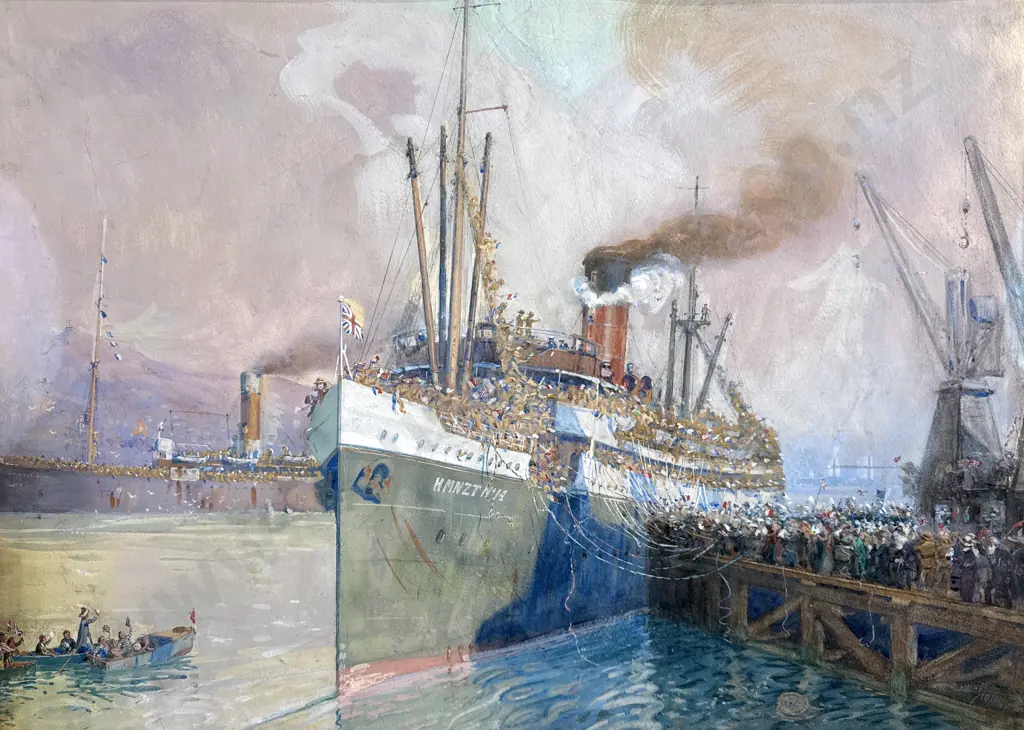
W.A. Bowring - Willochra, Watercolour & Gouache on Paper (1913)
Current Bid $360 (38 bids, reserve met)
Register as an approved buyer to leave a pre-auction bid on this lot
Register NowPre-bidding continues until this is the next lot to be offered live by our auctioneer
Buyer premium and GST is additional to your bid.
All bids are subject to our buyer terms and conditions
Lot Details
Walter Bowring (1874-1931) Willochra Watercolour & Gouache on Paper Signed & dated right left on recto (1913) 430 x 597mm The Press' private archive of Walter Bowring Additional Information: Framed with glass (in good condition) Comes with small framed information on the image. Information as follows: 'The Canterbury Regiment sails to war. The troop transport in this work by Walter Armiger Bowring is the Willochra, which was under the command of Captain R. Neville, and left Lyttleton with Canterbury troops of the First NZEF on December 14, 1914. Aborad the vessel were 1752 men of the Second Reinforcement, under the command of Major Charters. Two other troop transports, the Verdala and the Knight of Garter, sailed on the same day. The work was done for the Weekly Press. Walter Bowring (1874-1931) was born at Auckland, and educated at Auckland Grammar School. His first works were black and white sketches for the Auckland Observer, after which he became cartoonist to the Christchurch Spectator, and to the Weekly Press. In 1905 he went to London and studied under Orpen and John. Back in New Zealand, he made many portraits, some of which are now in public and private galleries. He also produced several important political and social cartoons, including those of the Court of Appeal (1914) and the Coalition Cabinet (1916). He also worked for Punch and some other London publications. Bowring visited Britain from 1921 to 1923, and was elected a member of the royal institute of Oil Painters. In 1925 he moved to Sydney, where he became a member of the Royal Art Society. He was married in 1901 to Millicent McOwen. He died at Sydney on November 2, 1931.' As both an artistic creation and a historical document, the work serves as an important resource for the study of regional history. Images can be directly connected to contemporary reporting in The Press, enhancing their significance when viewed in conjunction with written primary sources. Above all, each piece stands as an engaging and accessible record of its time, inviting collectors and the wider public alike to explore and appreciate Canterbury’s heritage, while reflecting the vital role of the Press in documenting Christchurch during a period of transition and renewal.
Other items you may like from this sale
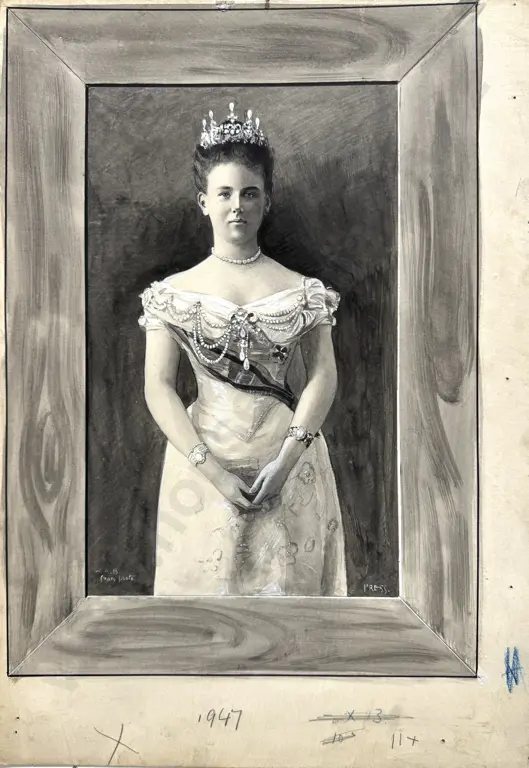
Walter Bowring - Queen Wilhelmina of Netherlands, Ink & Gouache on Board
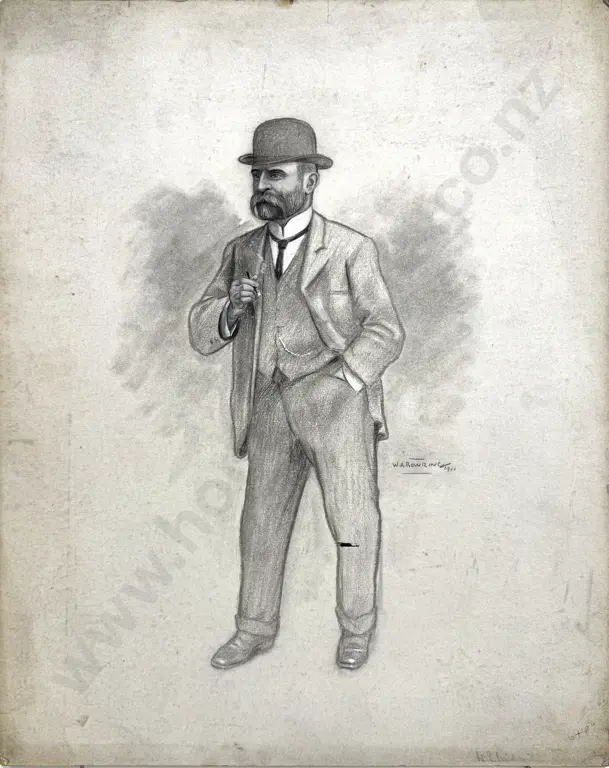
Walter Bowring -W.E.B, Ink, Gouache & Graphite on Board (1901)
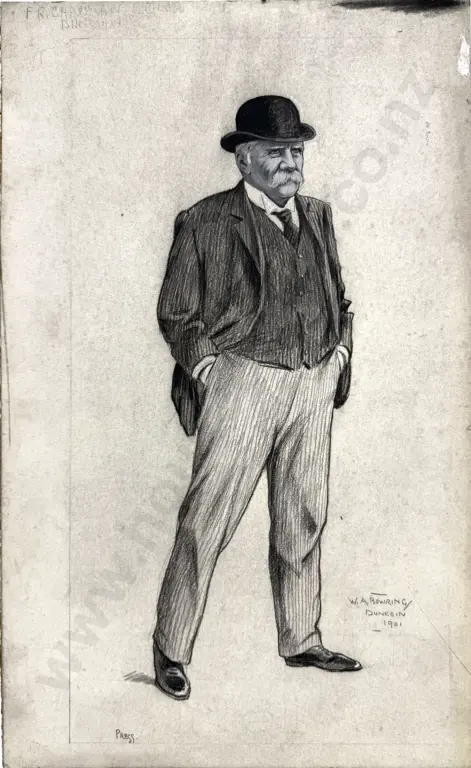
Walter Bowring -F. R Chapman, Dunedin, Ink, Gouache & Graphite on Board (1901)
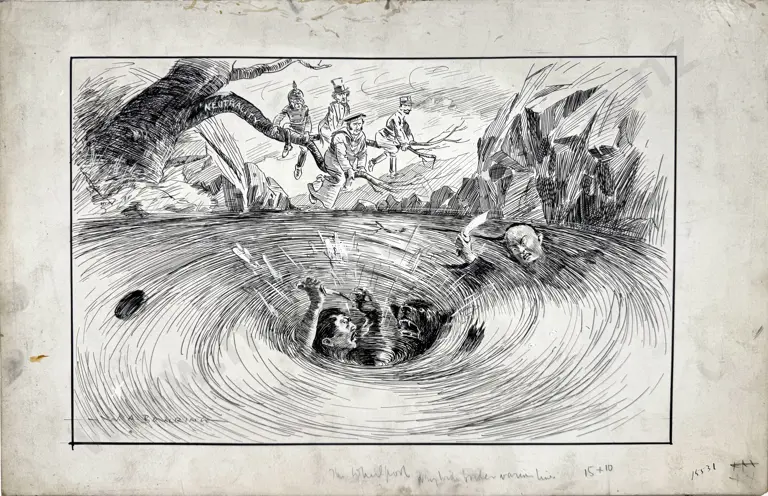
Walter Bowring - 'The Whirlpool' Ink & Gouache on Board
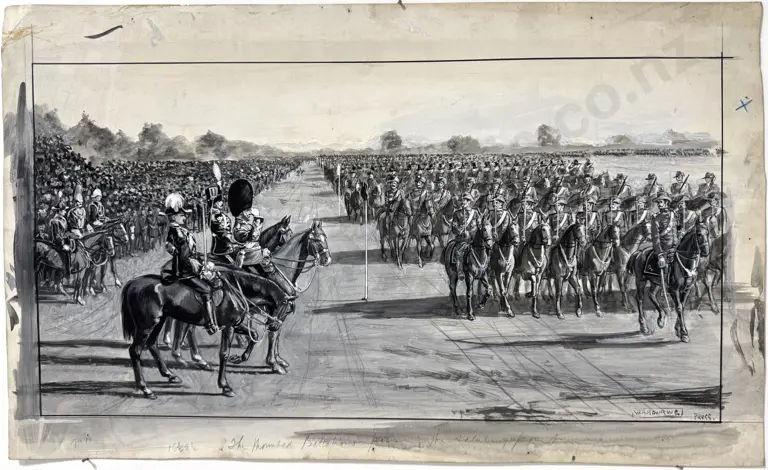
Walter Bowring - The Mounted Battalions Parade, Graphite, Ink & Gouache On Board
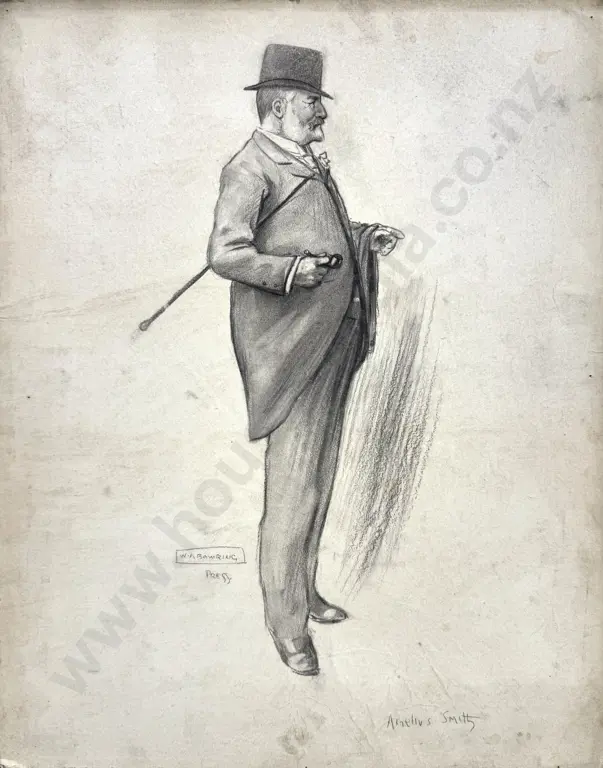
Walter Bowring - Amelius Smith, Ink & Graphite on Board
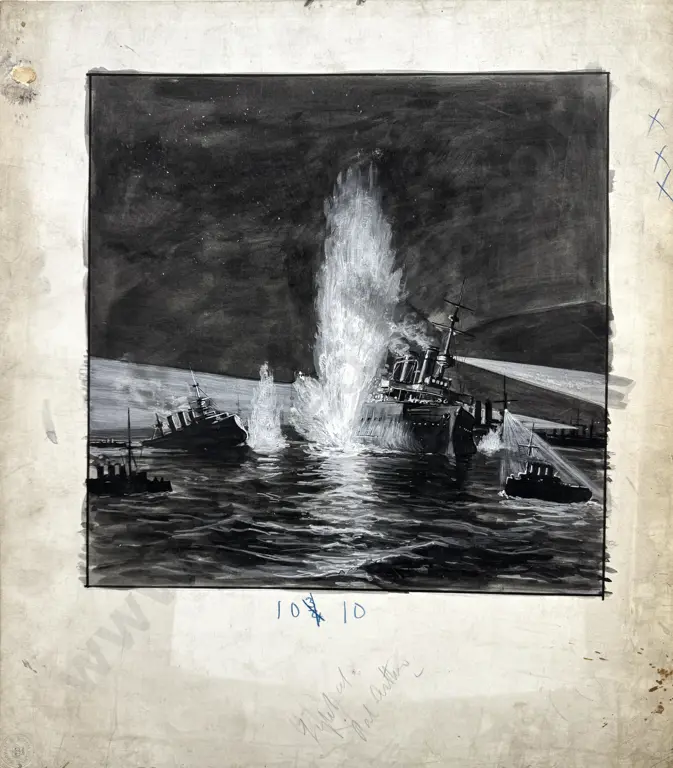
Walter Bowring - Fight At Port Arthur, Ink & Gouache on Board
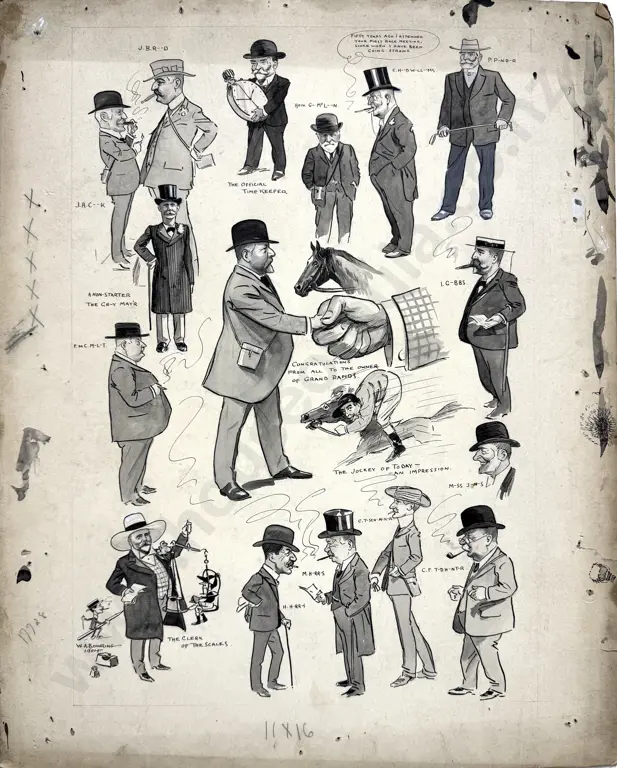
Walter Bowring - At the Races, Ink & Graphite on Board (1904)
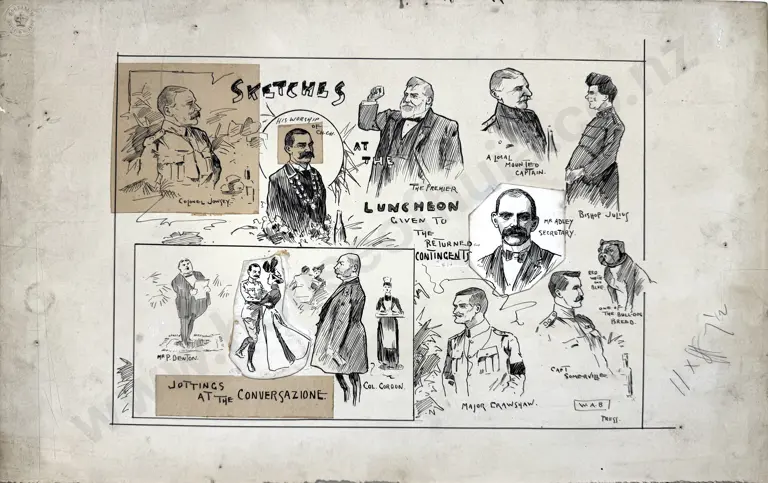
Walter Bowring - 'Jottings At The Conversazione', Ink & Mixed Media on Board (1901)
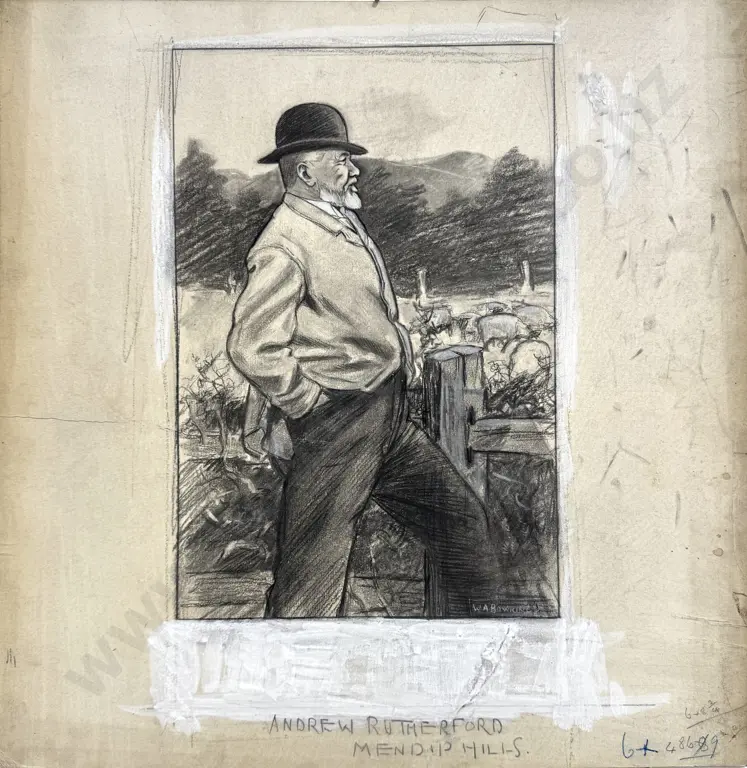
Walter Bowring - Andrew Rutherford, Mendip Hills, Ink, Graphite & Gouache on Board
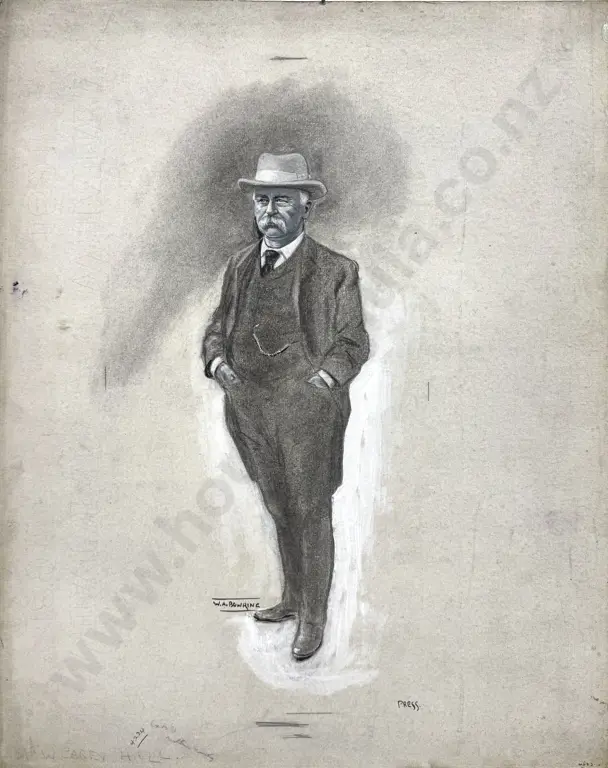
Walter Bowring - W Carey Hill, Graphite, Ink & Gouache on Board
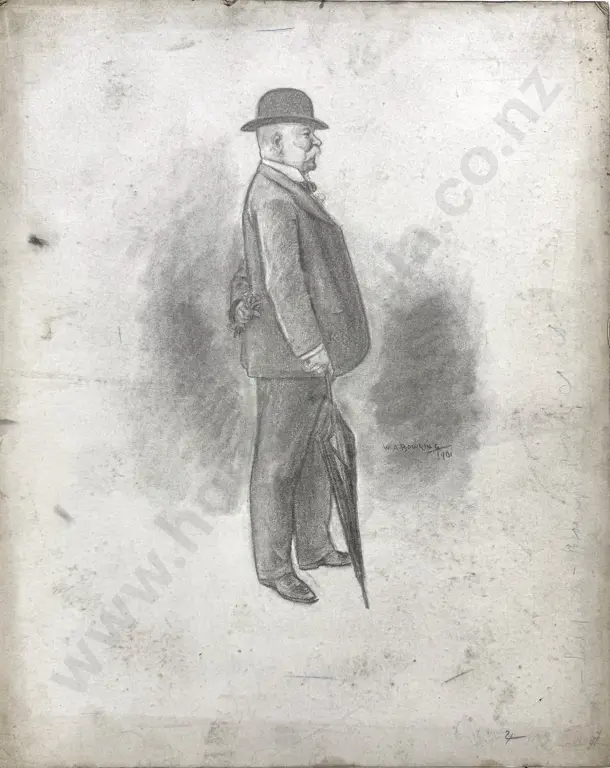
Walter Bowring - Un-named, Graphite & Gouache on Board - 1901
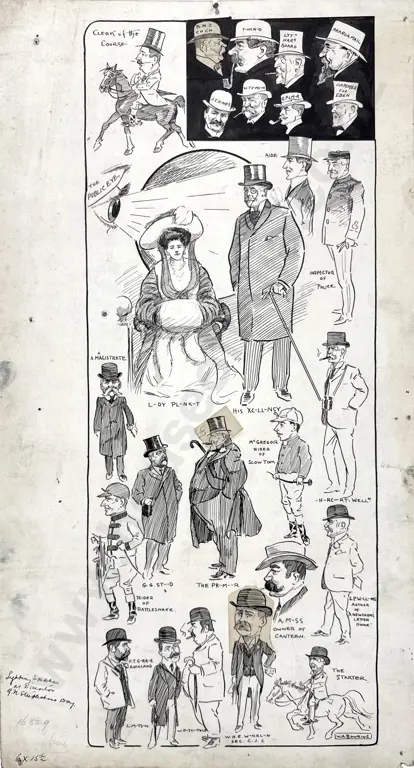
Walter Bowring - Lightning Sketches At Riccarton Park Raceway P2, Ink on Board (1901)
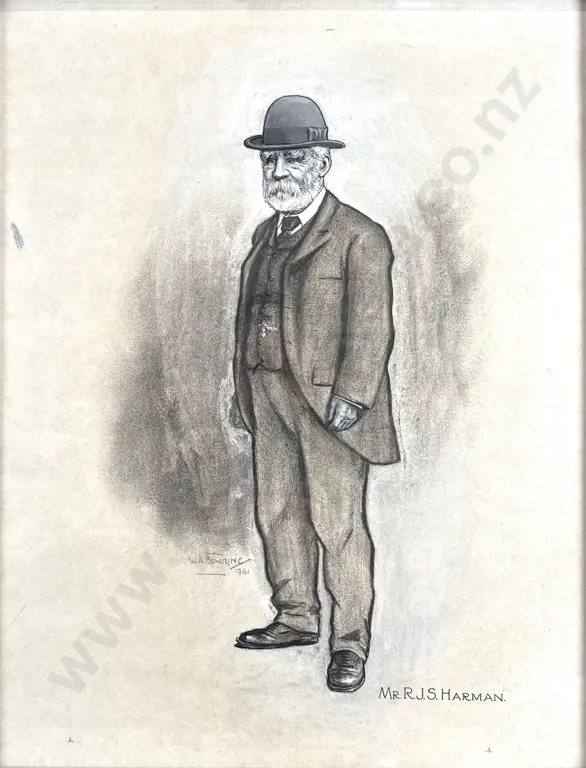
Walter Bowring - R.J.S Harman, Ink, Graphite & Gouache on Board (1901)
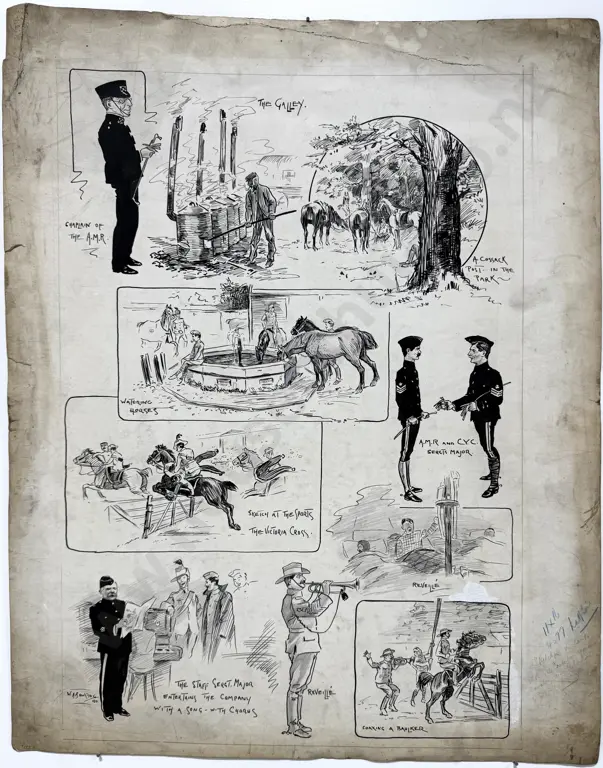
Walter Bowring - Military Training Camp, Ink on Board (1901)
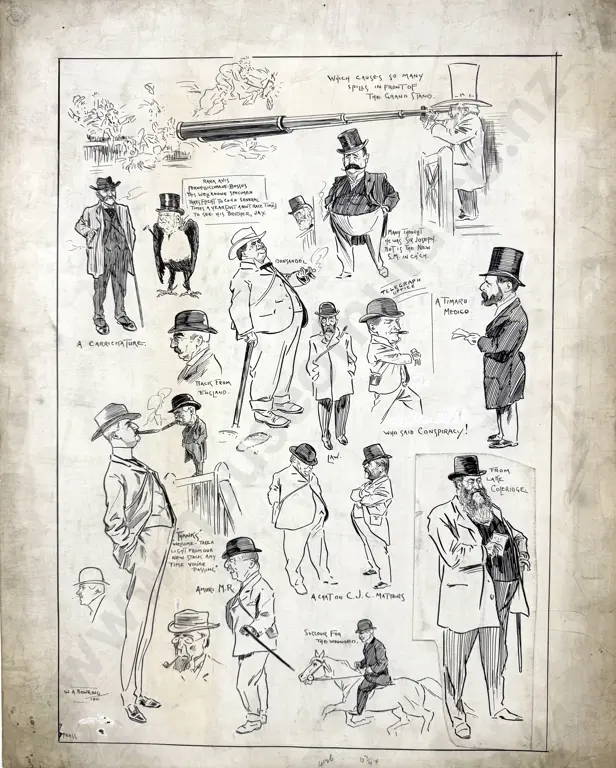
Walter Bowring - Lightning Sketches At Riccarton Park Raceway P1, Ink on Board (1901)
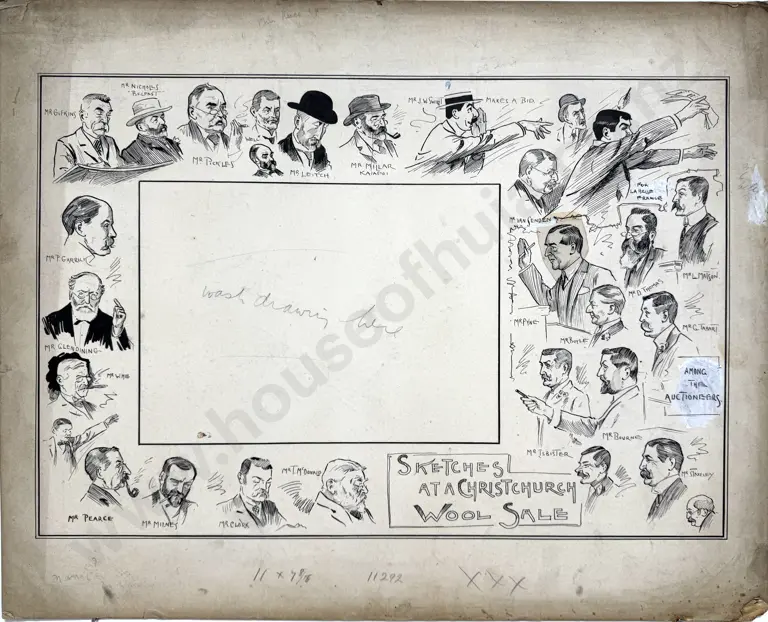
Walter Bowring - Sketches At a Christchurch Wool Sale, Ink on Board
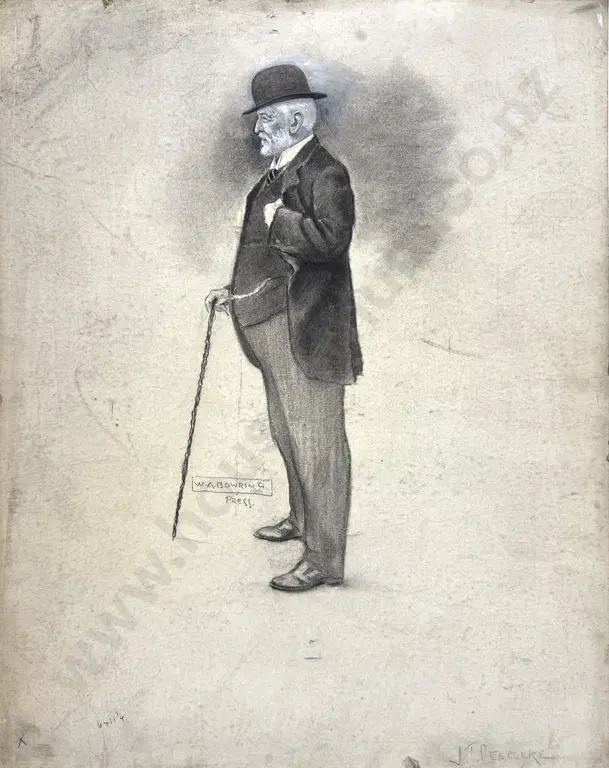
Walter Bowring - J T Peacocke, Graphite, Ink & Gouache on Board - 1901
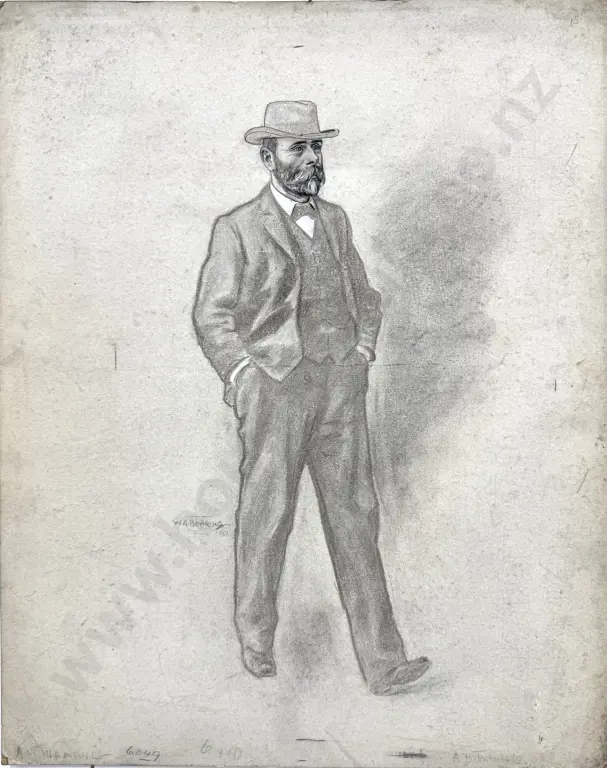
Walter Bowring - A H Turnbull, Graphite, Ink & Gouache on Board (1901)
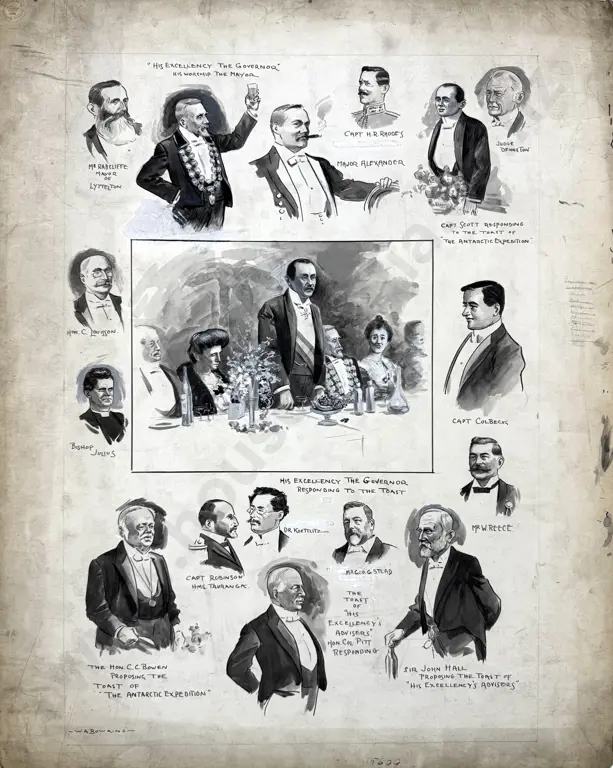
Walter Bowring - Farewell banquet for the Governor, Ink & Gouache on Card (1904)
